A Recipe for Opportunity: Inside Convene’s Partnership with Hot Bread Kitchen
Posted September 9, 2026 By ConveneFaced with one of hospitality’s toughest hiring markets and fierce competition for skilled kitchen talent, Convene found a partner in a New York nonprofit that turns entry-level jobs into lasting culinary careers.
In hospitality, the most challenging part of running a kitchen often has less to do with cooking than with finding, growing and retaining great culinary talent.
“The culinary world is probably one of the most difficult industries to hire in,” says Ryan Gallagher, Senior Director of Food and Beverage at Convene Hospitality Group (CHG). “Post-COVID, [the culinary workforce is] even thinner because it’s hard work and people have left the industry.”
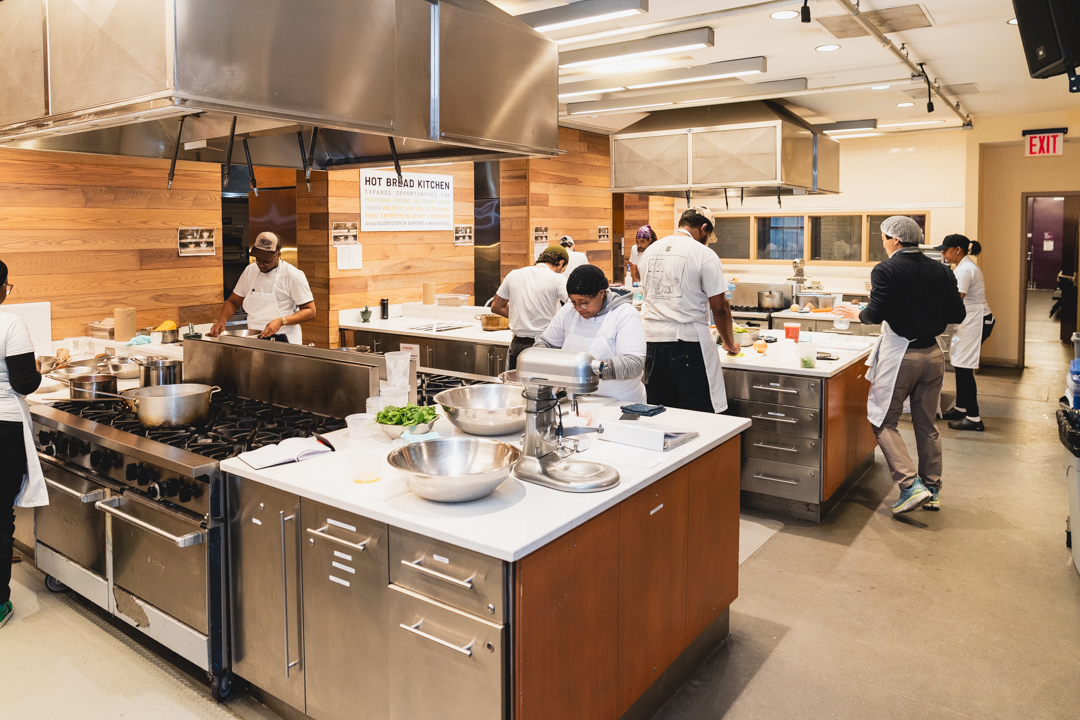
For a hospitality company like ours, whose events depend on the strength of our culinary teams, that’s not a small problem. In our search for a better way to find new talent, develop the people we already employ and make a positive difference in our communities, we recently formed a partnership with Hot Bread Kitchen, a New York City-based nonprofit that offers free culinary training, job placement and food entrepreneurship programs to New Yorkers facing barriers to employment.
This kind of partnership isn’t new territory for us in New York. According to Chef Ryan, we’ve long had a relationship with Emma’s Torch, a Brooklyn-based organization that provides in-depth culinary training for refugees, asylees and survivors of human trafficking. Hot Bread Kitchen is the next chapter in our work with nonprofit culinary programs.
A Different Kind of Talent Pipeline
Hot Bread Kitchen has spent nearly two decades opening doors for underserved people. The organization began in 2008 as a social enterprise bakery in East Harlem, staffed largely by immigrant women turning the recipes they carried from home into a foothold in the formal workforce. It has since grown into a full workforce-development organization with a single mission, as Director of Strategic Workforce Partnerships Eva Chertow-Spence puts it, “to empower people with economic mobility using the food industry in New York City as a lever.” Its free training programs, job placement and wraparound support are built for people facing real barriers to a stable career.
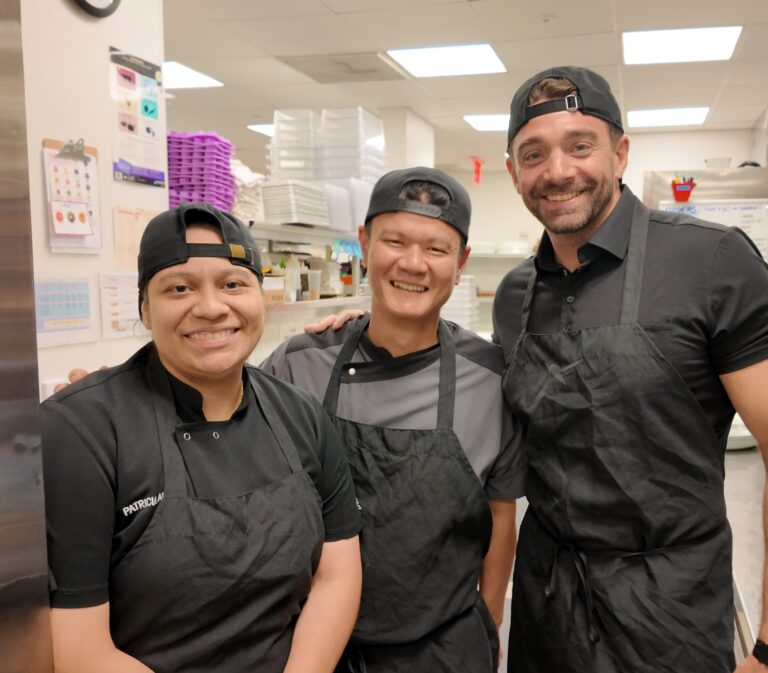
The fledgling partnership is designed to run in two directions: we hire Hot Bread Kitchen graduates onto our culinary teams and then send our own food and beverage employees back through Hot Bread Kitchen’s Management Training Institute to build leadership skills. So far, we’ve welcomed a Hot Bread Kitchen graduate into our kitchens, and one of our kitchen employees is in management training, but the goal is for both sides to increasingly support each other. “I’m hoping a year from now, we’ve got as many people in the managerial training as they’re willing to accept, and we’ve hired a ton of Hot Bread Kitchen people,” Chef Ryan says.
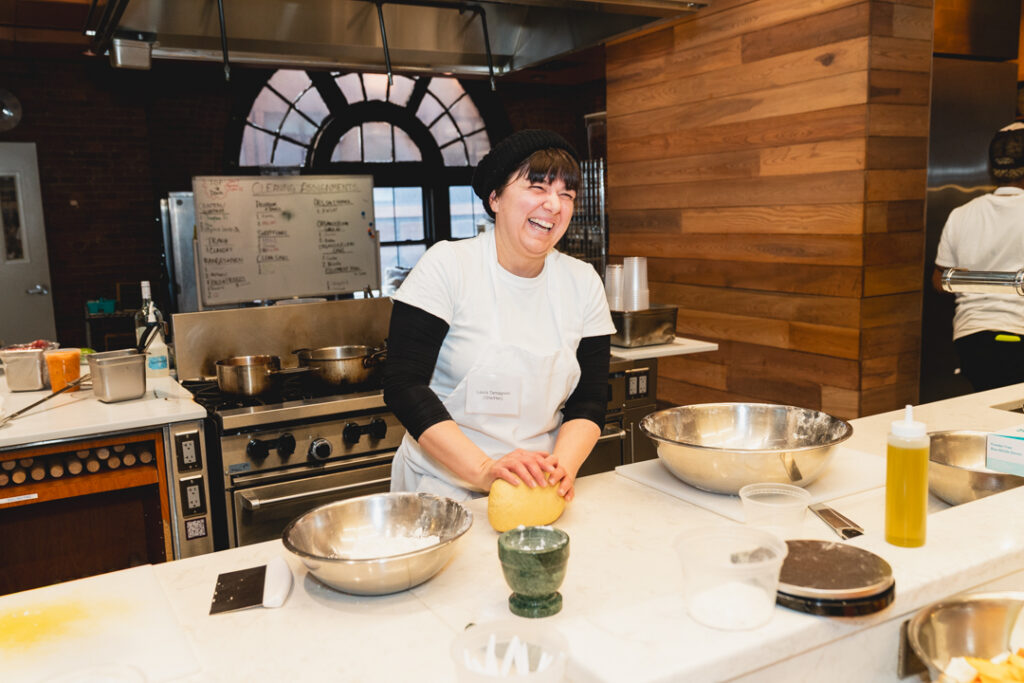
For Convene, hiring through Hot Bread Kitchen works as a trusted endorsement for prospective employees. “You know where they’re coming from, so you have a general idea of the type of education the person has received,” Chef Ryan says, adding that a Hot Bread Kitchen candidate arrives already grounded in culinary fundamentals and the habits of a professional kitchen, which in this market is a real advantage.
For Hot Bread Kitchen, the value of the new partnership with Convene is the quality of the job waiting on the other end for its graduates. Eva says Hot Bread Kitchen has relationships with roughly 360 employer partners across New York City, from small restaurants and bakeries to large hospitality companies, including Restaurant Associates and Union Square Hospitality Group. She’s especially excited about the Convene partnership because it offers workers what the F&B industry often doesn’t, including daytime, weekday hours best suited for employees juggling childcare and complicated schedules, pay above the industry standard, health benefits and room for advancement. Eva also credits Convene for its willingness to take a chance on someone still early in their career. “Your best employee can be someone who, if you take the time to train them in your systems, might last forever with you,” she says.
A Teaching Kitchen
One way we address a thin labor market is by nurturing the talent we already employ, and Chef Ryan has set up our culinary program to run as a teaching operation. “We operate under the philosophy we call ‘1% better every day;’ we always try to strive to do a little bit better tomorrow,” he explains. “I tell all my executive chefs, ‘Yes, you're an executive chef, but your number two job is being a teacher.’ Everyone should be teaching everyone and you should always be learning and trying to improve. We believe anyone who works at Convene should leave Convene better than when they arrived.”
The same teaching habit shapes how we bring people into the fold. As part of our Learning & Development department protocols, we use an on-the-job buddy system to onboard new culinary staff, pairing them with high-performing, experienced team members who provide real-time guidance during live shifts.
Convene prefers to promote from within, so when a role opens, the first question is whether someone already on the team is ready to step up, says Chef Ryan, who proudly points to three former cooks now running our kitchens as executive chefs. Hot Bread Kitchen adds another on-ramp, helping ensure the culinary teams supporting our events keep growing and improving their craft.
The Peer-to-Manager Leap
Hot Bread Kitchen’s Management Training was designed to address a glaring problem in the F&B industry: a lack of resources to train quality managers. “A lot of the time, people are promoted into a management role because they’re really good as an individual contributor, a great server, bartender or cook, not because they’re a great people manager,” Eva says, adding that formal instruction on how to actually lead is often missing in many foodservice businesses, a gap that can be especially apparent in restaurants.
Enter the Management Training Institute, formed to close that gap by preparing working professionals to transition from peer to manager. The curriculum leans about two-thirds soft skills and one-third hard skills, including leadership versus management; conflict styles and leading with empathy; giving and receiving feedback; HR and labor law basics; and enough finance to read a P&L, cost a recipe and build a spreadsheet from scratch. Created by Eva with support from Hot Bread Kitchen Upskilling Instructor Rian Dickson and a committee of restaurant owners and operators, professors, labor lawyers, small-business finance experts and leadership and mediation experts, the program is currently running its third cohort.
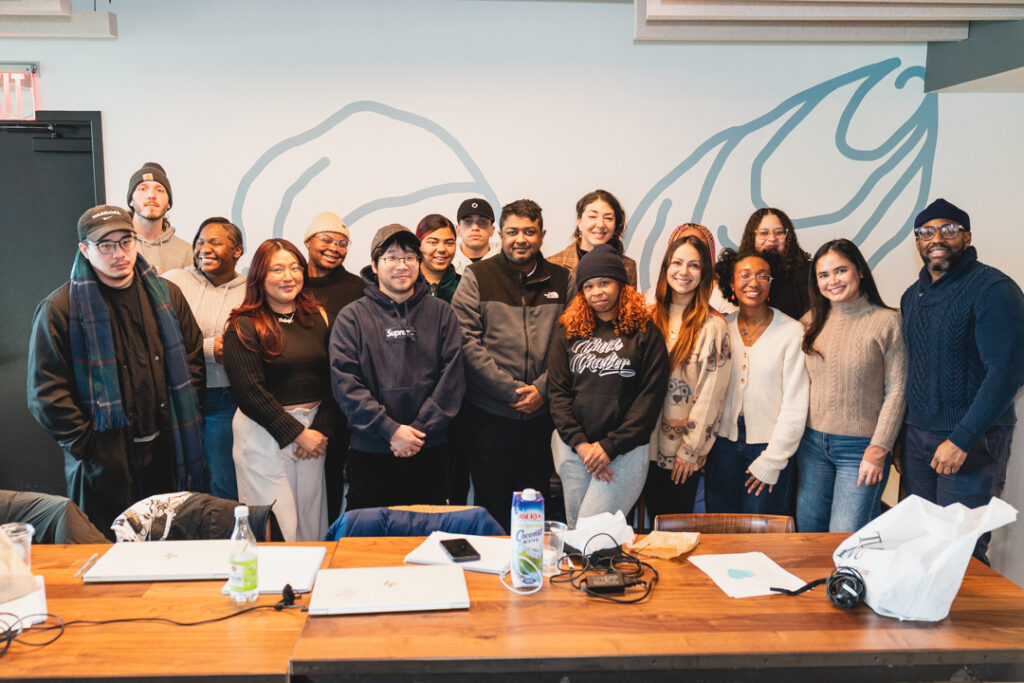
But the classroom environment does something the syllabus doesn’t capture. Hot Bread Kitchen caps each employer partner at two nominees per cohort of roughly 20 members, so managers-in-training build relationships across a wide slice of the industry. Those connections, she says, are what she loves to see the most, since busy restaurant professionals rarely get the chance to network outside of their places of employment.
The cohorts also get the chance to learn from seasoned culinary professionals in the local restaurant community, including Chef Ryan, who recently guest-taught a session on navigating the challenges of the peer-to-manager transition.
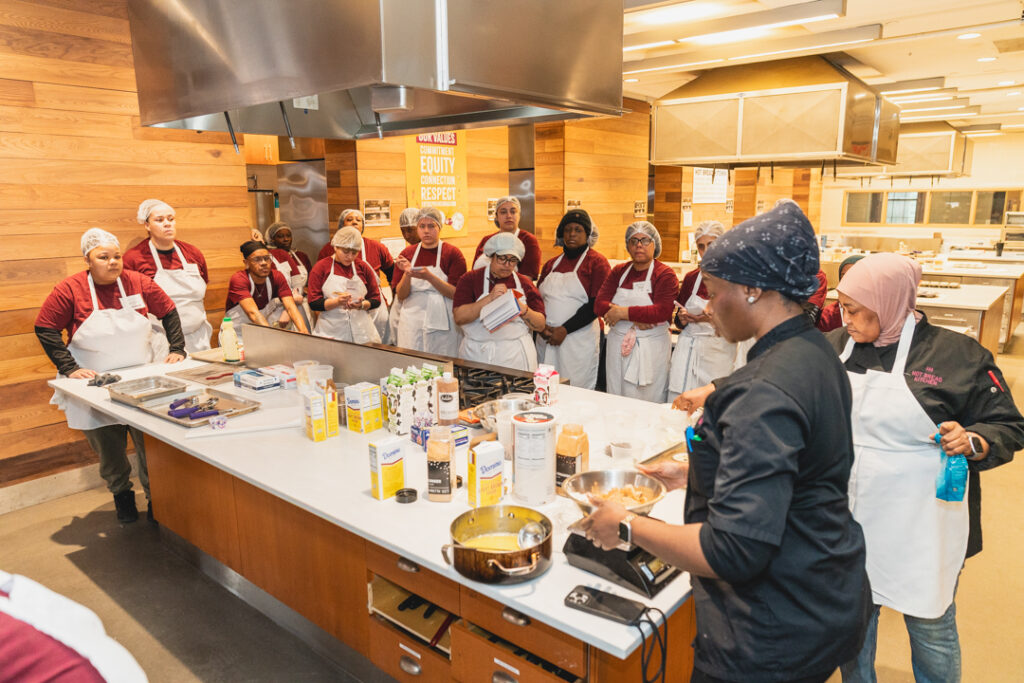
“There’s a difference between a 5,000-foot view and a 25,000-foot view, and for that individual who goes from a peer to a manager, that view changes overnight,” he says. “In the kitchen, you’re responsible for your own station, but once you go from a line cook to a sous chef, you are now responsible for everyone’s station, and you have to know how to get the best out of those individuals.”
Learning to make that leap, he says, is where Hot Bread Kitchen’s Management Training fits into Convene’s approach. “We always try to provide the opportunity for people to get better, hone their skills and become more well-rounded individuals,” Chef Ryan says.
The Long Game
Ask Chef Ryan what he envisions for the partnership, and he reaches for a sports term: a “farm system,” where both sides feed each other with a steady, growing source of talented people seeking to build sustainable, successful careers in the culinary field. Hot Bread Kitchen gains an employer partner worth sending its graduates to, and we gain fresh talent we can cultivate as we keep building culinary teams across our network of nearly 40 locations.
“Convene likes to do what I call ‘good human being things’ when it has the opportunity,” Chef Ryan says. “So when we have the opportunity to fill a business need and, at the same time, partner with an organization whose values align with ours, we’re going to jump at it.”
Eva concurs. “For people who want to build a career in the industry, Convene is a great place to land.
Photography Credit: Wini Lao