How Bar Design Shapes a Reception: 5 Planning Tips From CHG’s Beverage Director
Posted November 3, 2026 By ConveneCHG’s beverage director on how beverage service shapes a reception, and best practices for planning one that gets people mingling.
The signs of a good reception are unmistakable: People arrive, order a drink, find someone to talk to and an hour later, the room naturally sorts into small groups, buzzing with lively conversation.
Vlad Novikov, who came to Convene Hospitality Group (CHG) as beverage director after running the bars at the Riggs Hotel and Ned’s Club in Washington, D.C., has seen his fair share of receptions done well and those that missed the mark.
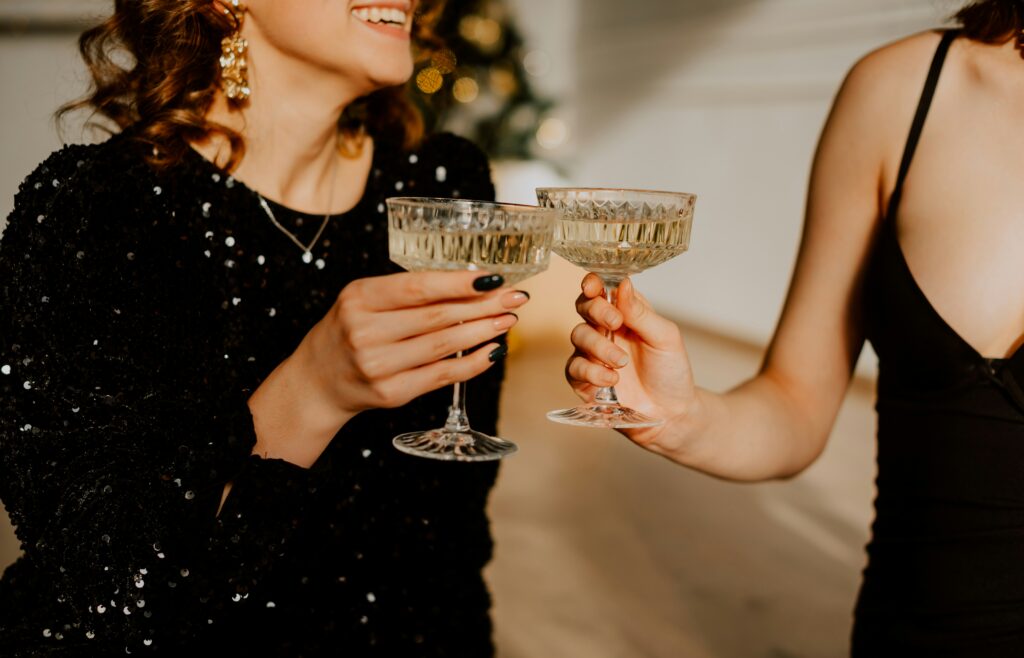
He recalls a themed New Year’s Eve reception where he got it right, positioning a large bottle of champagne at the entrance, clear of the guests’ arrival path, with pre-poured glasses waiting on trays so each person could take one and keep moving. Additional beverage options included an engaging action station making caipirinhas and mojitos to order; a nonalcoholic station offering single-serving still, sparkling and flavored waters; and two bars positioned at opposite ends of the room, away from the dance floor, food and bathrooms.
“This, along with passed themed low-proof shooters, made for an engaging and unstressed environment,” Vlad says. “The only points of concentration were ones that we wanted, like the dance floor.”
The Role of the Drink
At a reception, alcoholic and nonalcoholic drinks act as a social catalyst. Beyond refreshment, they provide a shared activity and a tactile comfort that eases social tension, enabling casual conversation and engagement.
Networking anxiety is a real thing. Research for the 2026 Neuroinclusive Networking Guide, from Meet Cambridge and the Association of British Professional Conference Organisers (ABPCO), found 81% of respondents overall feel anxious during networking activities, a figure that rose to 94% among neurodivergent respondents. Well-designed beverage service works against that, less by loosening people up than by giving guests reasons to move around and connect.
It’s Not the Alcohol
Alcohol needs longer to take effect than a typical one-hour reception allows, once guests have arrived, gotten a drink and started talking. What they get instead is a reason to introduce themselves, join or leave a conversation and move between groups — with or without alcohol in the glass.
“‘Shall we grab a glass of wine?’ is an easy invitation to extend, and one that is easy to accept from a stranger,” Vlad says.
A drink also gives guests something to hold. “You aren’t standing by yourself with a group, you’re standing having a drink with a group,” Vlad says. “Having a drink to sip gives you another way to punctuate your interactions.” A drink also “gives you an excuse to approach a high-top — you’re just setting your drink down for a moment, and can introduce yourself,” he says.
Best Practices
To set up a successful reception bar, Vlad offers the following five planning tips.
1. Spread the service out. Wherever the drinks are being served is typically where people will gather, whether or not they’re waiting for a beverage. Having only one bar in a crowded room creates a long queue that not only slows service but also disrupts the flow of the room.
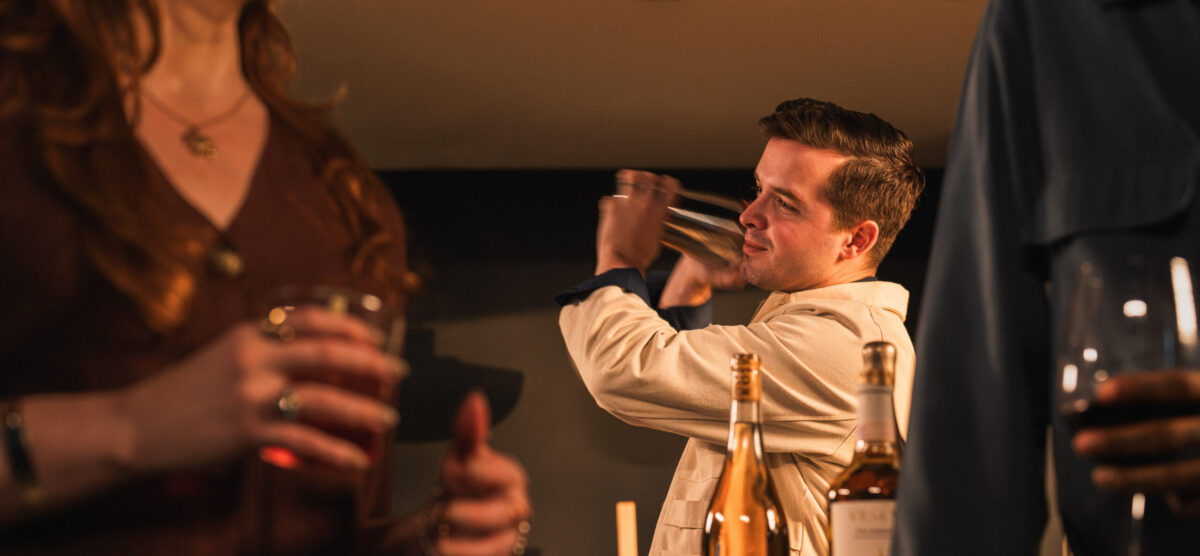
To avoid this kind of congestion, Vlad suggests creating several points of service around the room with a mix of volume, such as stationed grab-and-go bottles, tray-passed drinks and action stations crafting customized drinks.
2. Make the zero-proof options obvious. Don’t forget the nondrinkers. Gallup found this July that 54% of U.S. adults drink alcohol, a record low in a trend going back to 1939.
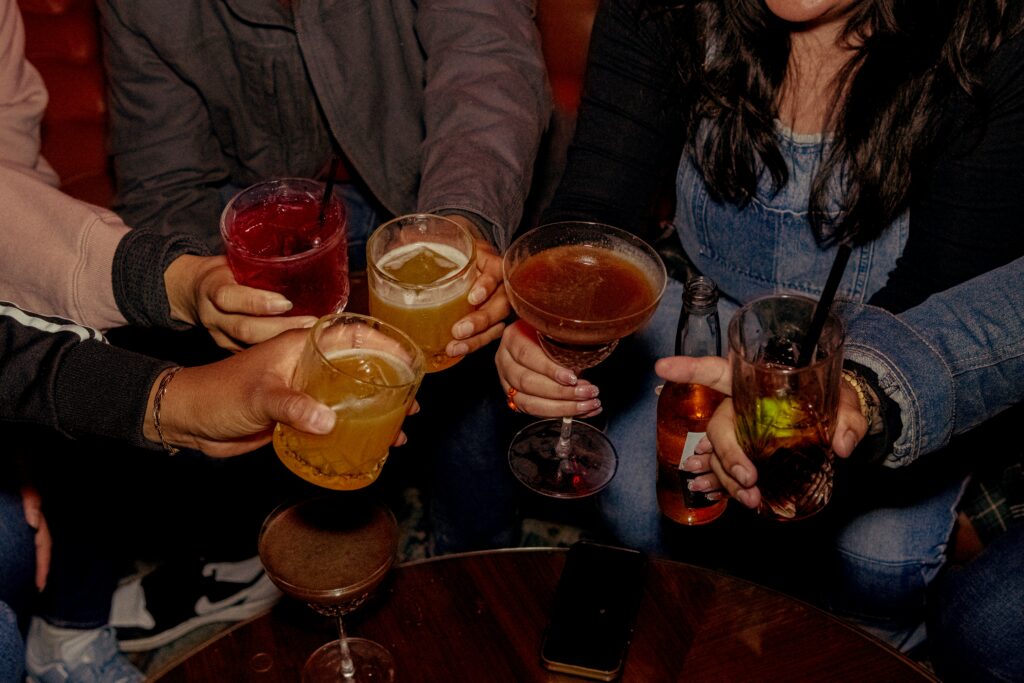
“Many guests won’t even approach a bar to inquire about nonalcoholic offerings, so it’s critical to consider the structure,” Vlad says. “Whether through signage, staging or service style, having another dispense point in addition to a physical bar promotes engagement regardless of alcohol consumption.”
Try building out separate visible bars or trolleys with only nonalcoholic options, such as a fresh orange juice station for a brunch, where guests can see the oranges and the juicer, or a barista station with a mobile espresso machine.
3. Put low-proof on the main list. These lighter cocktails belong beside the full-proof ones rather than in a section of their own — given the same consideration, not tacked on as an afterthought.
4. Build it into the package. Ask for zero-proof and lower-proof cocktails when you book, so they come as part of the reception package rather than something added on request. The other thing to hand over early is the attendee schedule, before any other bar planning starts.
“The most helpful thing [planners can give us is] an idea of the participants’ day or week, from beginning to end, so we can understand where they are in their journey and adjust accordingly,” he says. “If this is their fourth reception this week, maybe hard alcohol isn’t needed, or if it’s been a week of meetings and this is their first reception, something more celebratory is needed.”
5. Remember that less is more. Avoid the impulse to offer reception guests too much of a good thing. For example, four cocktails with cute or obscure names that say nothing about what’s in them will confuse the guests and the service team alike.
“We often have this compulsion to add more options in all areas, but for receptions, limited and clear options are what create a joyful and frictionless people-focused event,” Vlad says.
Why In-House Matters
All of this is easier when the venue runs its own bar program, as CHG does, with the beverage team involved in the planning conversation from the start rather than being brought in just for the event.