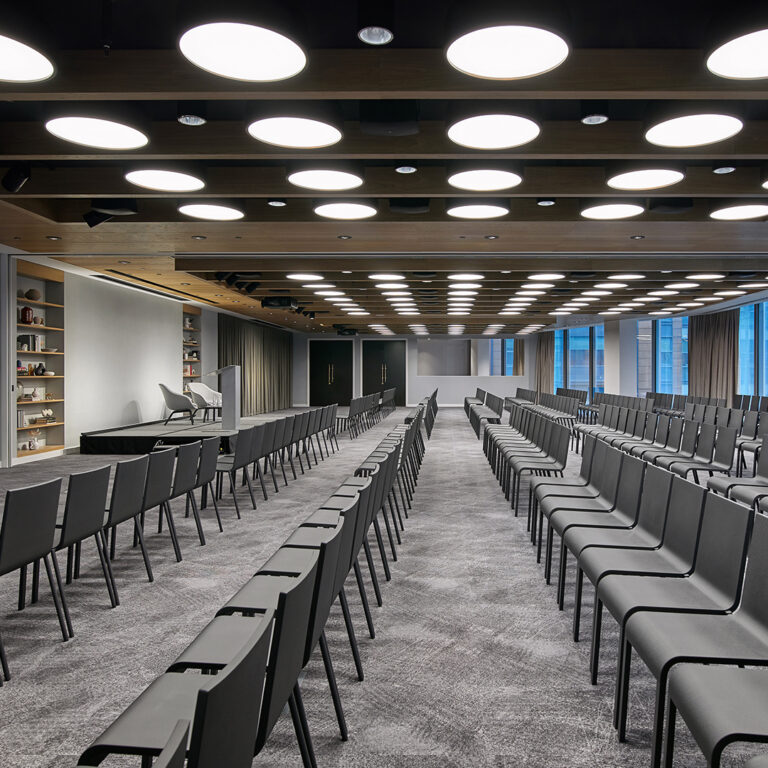
How to Find the Right Venue for Your Corporate Event
Posted June 13, 2024 By ConveneChoosing a venue for an event might be the most important decision you make during the planning process. The venue you pick can make or break your corporate event’s success, so it’s crucial to find one that fits your goals and can accommodate your needs.
With so many options available, it can be hard to determine which venue is right for you – but there are things to consider and questions you can ask yourself to make a decision much easier. In this guide, we’ll explain how to find a venue for an event based on location, budget, amenities, and goals.
Choose a Neighborhood
If you’re planning a corporate gathering for people from several different locations, and you don’t have a specific city or region where your event needs to be hosted, you can start to narrow down your options by evaluating the accessibility and activity of certain neighborhoods.
Find an Area That’s Easily Accessible
Keep in mind where your attendees are coming from and how easy it will be for them to travel to and get around the area you choose.
Pick a city with a major airport so people can easily fly in for your event. But be mindful that people flying in will also need a way to get around, so it’s important to assess what other public transportation options are available – whether it’s trains and buses or rental cars and rideshares. You should also take lodging options into consideration – make sure you pick a neighborhood with plenty of hotel offerings, especially for large events.
Find an Exciting Area
Consider hosting your event in a popular area where people will feel excited to visit – think Midtown Manhattan in New York City, The Loop in Chicago, or the heart of London. Destinations with plenty of entertainment and dining options, historical landmarks, and other attractions will entice attendees.
Choosing an exciting neighborhood or district is especially important if you’re hosting a multi-day meeting or event. You may want to offer your attendees off-site networking or experiential programming, or they may want to take time on their own to explore and check out what else the area has to offer.
However, you should also cross-reference the event calendar of any city you’re considering to see what other events are taking place at the same time as yours. Major events with high attendance will make it more difficult for you to book a venue. It also may be harder for your audience to book flights and accommodations at hotels in the city.
Start Looking for Venues
Once you’ve chosen a destination for your corporate event, you can start searching for venues in that area.
Depending on the size of the neighborhood you choose, you may still feel overwhelmed with how many venue options are available. Here are some factors that will help you narrow your choices:
Location
Some of the most important considerations to make when narrowing down your venue options are where each is located and what’s nearby.
Ideally, the venue you choose will be centrally located and close to transportation hubs that attendees can use to get to and from the event. Find out how far the airport is from the venue, how many bus or train stations are nearby, and if there are parking options.
You should also look at what’s around the venue that may benefit your attendees. Are there restaurants or coffee shops they can visit during breaks? If you’re hosting a multi-day event, you’ll want to check which hotels are nearby as well so visitors can book a room close to the venue.
Size
When you’re looking at venues, it’s important to keep in mind your target audience size, what your agenda looks like, and what types of spaces you will need. As you narrow down your options, check whether each venue can accommodate the number of attendees you’re expecting as well as the sessions you have planned – is all programming set to be in one room? If not, how many breakout spaces will you need and how big does each need to be? Is there a reception space available? Will you need a speaker green room or a separate space to serve as the event’s command center?
Make sure to discuss all your room and capacity needs in discovery conversations with each venue to make sure they’re a fit for your event.
Functionality
Just because a venue can accommodate the number of attendees you expect doesn’t mean it is automatically the right fit for your event.
Think about how you envision your event setup. Are the spaces at the venue able to accommodate that vision? Will you have the capability to custom configure room layouts, or are you constrained by fixed furnishings? For example, a 200-person hall with stadium seating might be the right size for your event, but not ideal for your awards luncheon that requires cabaret tables.
And make sure to ask each venue how the room capacity differs by setup – it may be able to accommodate 500 people in theater-style, but only half that in table rounds.
Availability
A crucial question you need to ask is if the venue is available on the date (or dates) of your event. Any venue that isn’t available can get crossed off your list.
We recommend planning your event and finding your venue as far in advance as possible so you can avoid availability issues and have access to your ideal venue on your preferred dates. If you are planning in a shorter time frame, like three months or less, consider being more flexible with your dates. If you can adjust the timing of your event by a few days, or even a week, you may be able to access additional venues.
Budget
If you find a venue you like, it’s also important to determine whether it is within your budget. Depending on the provider, the venue may be only one of many expenses you need to account for, you don’t want to overspend and throw your budget off early in the planning process.
When you find a venue in your price range, ask about their pricing structure – some providers are more likely to operate as a partner and not just a place, offering comprehensive packages that account for everything from room rental rate to technology add-ons and food and beverage. Others still may provide all ancillary costs upfront while some may add unexpected fees after the event that could accidentally put you over budget.
Amenities
Some venues have on-site amenities for corporate events, while others offer event space only and require you to source external vendors for add-ons. It’s important to know what each venue offers in-house before you make your decision.
Common amenities that may be available through an event venue include: food and beverage, and technology like A/V equipment and WiFi. If the venue offers these or other amenities, you should ask whether they're included in the cost of the venue or if there will be an additional fee.
You should also ask about on-site staffing requirements and optional support that may be available at a supplemental cost. For example, a ground-floor venue may require the hire of private security while you may have the option to have an A/V technician be on-hand to help address any issues that may arise during your event.
Exclusivity
Consider the content and audience for your corporate event – is there something confidential or proprietary you will be sharing? Will you have a V.I.P. speaker or guest that requires privacy or discretion? If so, you may want to look for venues that allow you a full buyout of the space to ensure you have full control of the property.
On the other hand, if your programming deems it reasonable to share the venue with additional concurrent events, you may find there are cost savings.
Regardless of the content and audience of your event, you should check if the venue has other events booked on your date. If they do, ask about the size and how it may impact your logistics. Larger events being held at the same time as yours may cause traffic issues, unwanted noise, or limited access to amenities like restrooms.
Visit Your Shortlisted Venues
Once you’ve narrowed down your list of venue options, set up a time to tour each one. Doing so will give you a better feel of whether it would work for your event and attendees. Seeing the venue in person also allows you to better assess the layout and potential event flow. Is it a flexible space that can comfortably accommodate your event setup and attendees?
As you enter each venue, think about the number of attendees you are anticipating and how easy it will be to get them in and out of the space. Evaluate whether the venue was easy for you to find or if you struggled to find the entrance. Was there a dedicated entryway you were given access to or did you use a shared entrance with others coming and going from the building?
During your visit to each venue, be sure to assess the atmosphere and ambiance. Check for features like friendly and helpful on-site staff, natural light, inspiring artwork that sparks conversation, and city views your attendees can enjoy.
If your event will take place across multiple rooms, what will the egress and ingress experience be like as you move from session to session? You should also note the number of bathrooms, the availability of private spaces like Mother's Rooms or Prayer Rooms, and if there are quiet areas for guests who may need to step out for a call.
Remember that inclusivity is critical – evaluate the accessibility of the venue to ensure guests of all abilities can get in and out and easily move around. Make sure there are ramps and elevators for attendees to use as alternatives to stairs, brail signage for visually impaired guests, and closed-captioning for those who are hard of hearing. You should also consider the lighting in each space and whether it’s comfortable for any neurodiverse attendees.
Before you visit any venues, check our list of 10 important questions to ask on an event venue site tour.
Pick Your Venue
After you’ve finished your on-site tours, it is time to make a decision. Choose the venue from the list of finalists by determining which you feel best supports your corporate event objectives, fits your budget, and provides a comfortable space for you and your attendees.
Work directly with the venue to book your event and be sure to carefully review the contract. Remember to look at the terms and conditions so you’re aware of cancellation policies, any additional fees, and liability insurance.
When you book the venue, confirm when you will get access to the space, and be sure to account for any additional load-in and load-out time needed so that you may coordinate the logistics of setup and cleanup.
Find Ideal Venues for Corporate Events with the Convene Portfolio of Brands
If you’re looking for the ideal venue for your next corporate event, the Convene portfolio of brands – including etc.venues – have beautifully designed meeting and event destinations conveniently located throughout several cities in the U.S. and U.K.
We’re a one-stop partner offering comprehensive event packages with upfront, transparent pricing. Our packages can accommodate Meetings & Events of any size and include our premium offerings as a standard, including Executive Chef-led gourmet catering, state-of-the-art A/V and technology, and on-site hospitality teams to help guide you through your event from planning to execution.
Our thoughtfully designed, modern event spaces are strategically placed near major transportation hubs, making them easily accessible for all attendees, regardless of where they’re traveling from.
Ready to host an unforgettable event? Contact us to learn more or book a tour at any of our 35+ premium venues.