Your Guide to AV Technology When Event Planning
Posted March 10, 2025 By Mike GalardiAs the use of audio and visual (AV) technology has become more commonplace, demand for higher-produced meetings and events has increased. Meetings can range from small gatherings in a boardroom with pen and paper to technology-driven events that can be broadcast across multiple time zones. Today, bringing together hundreds of attendees to listen to a presentation in person — or virtually — involves an AV system with many moving parts. This type of audio and visual equipment includes digital components such as a microphone to amplify a speech, a digital projector to display a presentation, an LED screen showing a branded message to guests when they enter a venue, and more.
As an AV Designer at Convene, I’m going to break down the main components of common AV equipment and which technology solutions you might need when hosting a meeting or event.
What is AV Technology?
“AV technology” can be used to describe most of the tools and equipment that help presenters speak to audiences, whether planning a corporate event or an expansive tech conference. You may not realize it, but we are surrounded by technology in our daily lives that can be considered part of a professional AV system. Speakers for announcements in a public transport center serve a similar purpose to the audio system in one of Convene’s Forums. The digital signage at your local shopping center performs the same function as digital signage at an event space: to convey information through visuals to an audience.
The basic needs of any meeting and event are for a presenter to be heard and for their content to be visible to an audience. These requirements are satisfied through what is called “audio and visual reinforcement,” which may include lighting, headsets, video cameras, and/or virtual reality equipment. For example, a reception after an event could be enhanced with simple up-lighting, directional lights pointed towards the ceiling or venue features, to match your brand colors.
When you walk into one of Convene’s large meeting rooms — a Grand Hall, Forum, or Hub — you will see a lot of this equipment in use, including projectors and screens, digital displays and LED screens, microphones, and speakers. They are core components necessary for most meetings and events, supporting information delivery and audience engagement. The integration of these parts as a unified system is what creates a seamless experience.
How does an audio system work?
Microphones, mixers, amplifiers, and speakers are all part of a basic sound reinforcement system. Microphones capture sound in real time, which is manipulated by a mixer in a professional system designed to control the tone, volume, and balance the sound. A mixer then feeds the sound into an amplifier to power speakers that increase the initial sound captured at the beginning of the signal path, as in the microphone.
Sound reinforcement is not the only application for an audio system. In smaller rooms where microphones are not needed for presenters to amplify their voices, they would still be needed to capture the sound for recording, video conferencing, or to be sent to a livestream for a virtual audience.
Audio reinforcement systems work best when the signal at the very beginning is strong and clear. This is why presenters need to project when using a microphone: a good signal in means a good signal out.
There are three basic types of microphones:
- Wireless handhelds: These microphones are held in your hand, a common option you might see used by a broadcast reporter or stage presenter. Handhelds are great for easy sharing between multiple presenters or audience members during Q&A sessions. Wireless microphones are less practical for presenters who like to talk with their hands. A handheld's effectiveness is reliant on the person speaking to be mindful of the mic's location.
- Wireless lavaliers: The microphone element is fixed to the presenter, often to a shirt, to free their hands to move however they please. Lavaliers are great for presenters who will be on camera as well. Different styles of lavalier microphones clip on to clothing, and others are worn on the face. Both are worry- and hands-free solutions.
- Wired microphones: This is a common stationary option for microphones that is connected with a wire to the audio system. Wired microphones are a simple and cost-effective AV solution for when you want a mic to be “anchored.” Wired microphones can be affixed to a location like a lectern, tabletop, or stand.
The number of microphones needed for an event is determined by the number of simultaneous presenters on stage and with consideration for subsequent presenters. Handhelds make the transition easy, while lavaliers would require additional mics for the waiting presenters and tech assistance to help speakers with the equipment before getting on stage.
Visual equipment in AV system design
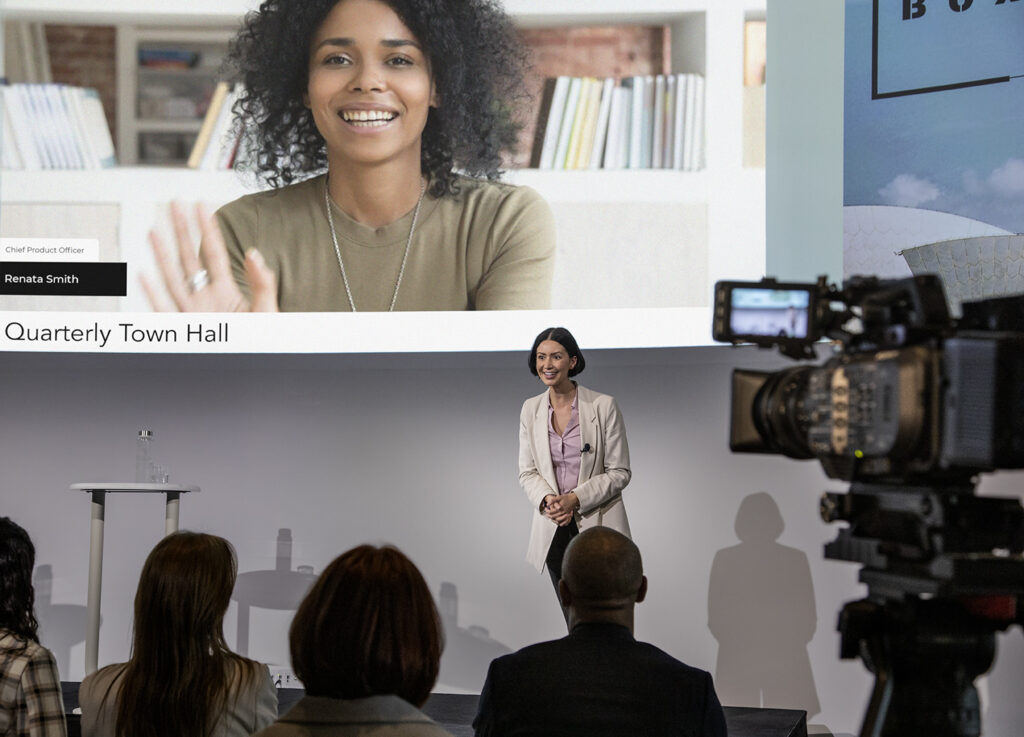
Video systems capture or repeat a digital visual for greater distribution. Color, brightness, and size affect how video signals are received by an audience. Compare your computer monitor or home TV to a cinema experience. You can watch a movie on either, but a high-resolution theater projector will deliver a more memorable experience.
Audio and video are the core backbones to any meeting or event, and getting these right is important for not only your attendees but your presenters as well. Pairing large, vivid displays with a good audio system can have an incredible impact on ensuring your message reaches attendees. The needs for a meeting or event can vary depending on the presentation you’re interested in giving. If your presentation is content-heavy, with stunning high-resolution images and captivating visuals, then an LED video wall would be the best way to deliver that content. For your everyday presentation, projection screens paired with high-definition projectors are perfect for sharing content. No worries if your audience is larger than what the room can accommodate; integrated video systems are designed with overflow capabilities that allow you to share the content on any screen to another room with additional seating.
AV systems can be enhanced by adding in processing that allows for compositing video sources onto a single screen, such as layering logos, titles, and multiple video sources on screen at once. The right AV technology will help you to select the best technology and ensure your meeting or event is successful from start to finish.
Understanding your event’s AV tech needs
Any offsite meeting or event will always require basic audio and video systems. The level of reinforcement and type of equipment needed will be determined by the event type and size of the audience. Convene removes the guesswork for clients by proactively equipping each room with what is most appropriate based on size and use case. There are endless possibilities with technology; projection is not just for meeting content, lighting isn't just for stages, and audio systems are not just designed for background music.
Basic video systems are required to deliver content to the eyes of your attendees and are usually composed of a source (typically a laptop), some processing, and a video display or projector. Audio systems are important for ensuring a presenter is heard. In smaller rooms, equipment like microphones and speakers may not be needed for basic meetings. However, in larger rooms where a presenter on stage would be difficult to hear in the back of a room without some kind of reinforcement, it becomes necessary.
With enough speakers to cover the space, we now need to consider microphones, specifically how many and the type preferred for the presentation type. Many forms of support can be deployed to ensure a smooth and successful event. Here are a few ways to enhance your meeting and make it more impactful for your audience:
- Up-lights: Up-lights are designed to project colored light upwards from the floor onto the walls and ceiling. They can easily bring your brand’s look and feel to the stage by projecting your brand's colors onto accent banners or stage design elements. Deploying up-lights during a reception or cocktail hour creates a great atmosphere for networking or enjoying a social gathering.
- Confidence monitors: Confidence monitors are typically screens that are only visible to a presenter on stage. Employing confidence or “down-stage” monitors will help you see the content on the screens without having to turn away from the audience.
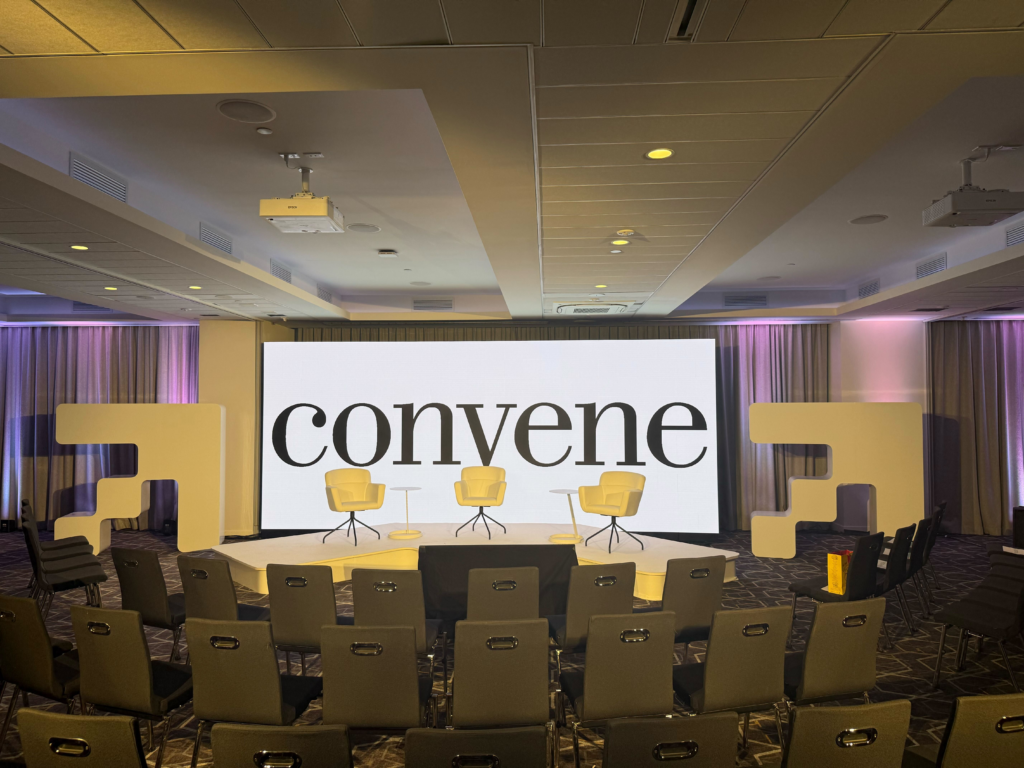
- LED Video Walls: Video walls are an impactful way to display content for an event. They are often the brightest, most vibrant, and most flexible display form available and can be built to custom sizes. A single video wall spanning across a room and behind a stage can double as both presentation content and a digital banner.
- Speaker timers: Visible timers are used to keep an event on time by providing a countdown (or count up) clock for anyone on stage.
- Custom media: Creating custom media that includes logos, titles, and moving backgrounds for a video wall can also be a wow factor for any event.
- Live streaming: If you’re trying to expand your event beyond the four walls of the venue, live streaming enables hybrid functionality, allowing you to reach an audience in multiple countries and time zones. Attendees can stream the presentation from a computer wherever they are in the world.
A confidence monitor, speaker timer, and slide advancer are easy-to-add items that provide a smooth experience for presenters.
AV technology for large events and conferences
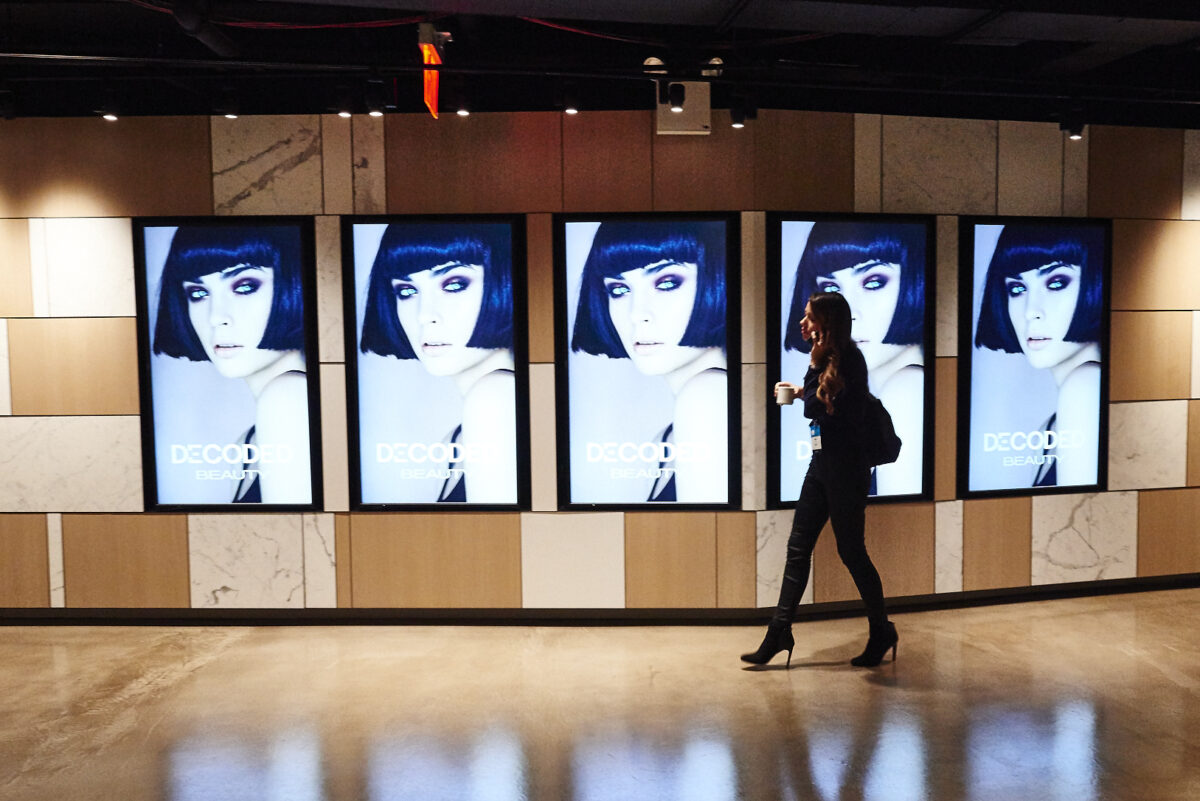
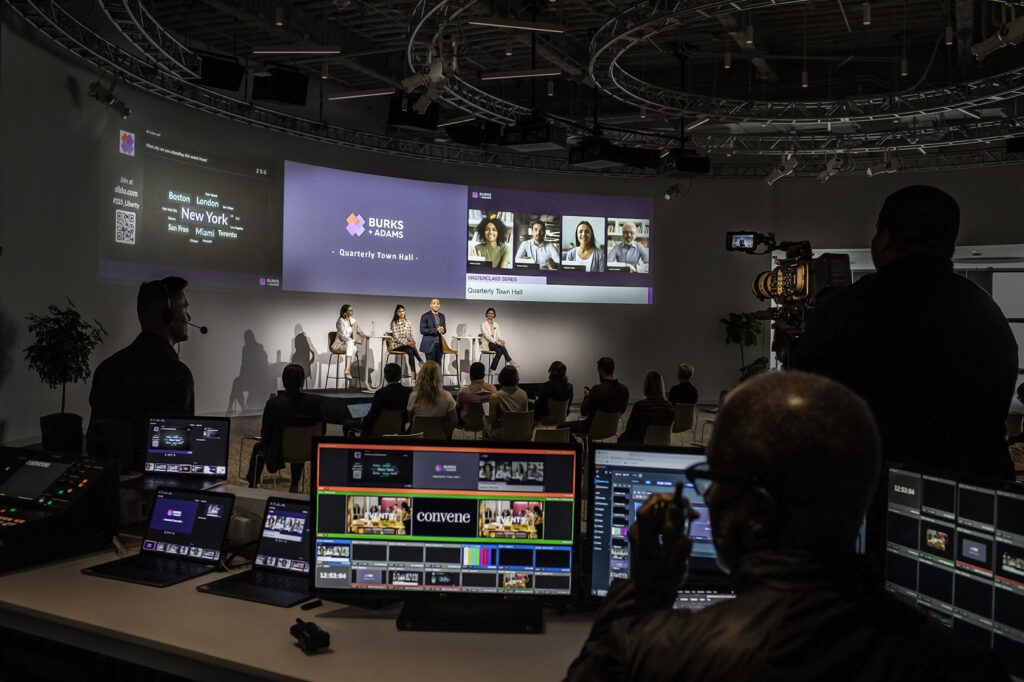
In addition to the basic AV needs of an event, AV enhancements can elevate a town hall or investor meeting to a full-scale production event that will leave attendees talking about it for weeks. Professional AV enhancements can be as simple as up-lighting that matches the brand’s colors, utilizing our digital signage opportunities for simple branding, or adding additional displays to line gallery space with logos and digital content. AV tech can also be as complex as rebranding the whole space with logos and graphics, enabling hybrid capabilities, or enhancing your event with moving light fixtures, music, and more.
Great events rely on technology as well as talented AV technicians to operate the equipment. There are plenty of ways to ensure you’ve got the perfect pairing of team and tools to make your event successful. It all starts with planning the technology you need. For higher-production events, there are plenty of ways to create immersive or experiential events for your attendees.
Our team can strategically place lights throughout the space to create an ambiance perfect for ending a day of engaging presentations and workshops. Quality up-lighting is easily deployable and brings a space to life by spotlighting a stage and adding accent branding.
For an event ranging from 150 to 300 people, there are several ways to enhance an event at this level. If you’re looking to reach an audience that cannot be present in person, adding enhancements to turn your event hybrid, including live streaming the presentation, will allow you to reach and engage attendees all over the world. For larger and higher-production events, you may look to equipment like LED video walls with impressive scale, resolution, and flexibility in displaying content. More powerful audio systems will also allow your attendees to feel the music as a CEO takes the stage.
Larger AV production needs will require a larger production team. These events call for diligent project management to ensure all the moving parts are prepped and ready for show day. Additional staffing like stage managers and technical directors help support run-of-show the day of the event and ensure every cue is on time. Meticulous planning and attention to detail is needed, as well as team members who are the best at what they do.
Larger AV teams need to communicate, so the addition of an intercom system may be required to keep everyone aligned. This “comm” system allows quick, discreet communication across the space without disruption during the event.
In-house AV techs vs. hiring an external AV vendor
Event AV is not just about the meeting, it’s about creating an experience for your attendees. Technicians who specialize in audio, video, lighting, and stage will get your event over the finish line time and time again in a memorable and compelling way. Unlike basic AV offerings, Convene offers built-in systems that are flexible and tailor-made to host events large or small.
Convene installs technology systems and employs a dedicated AV technical team to handle the complexity of event AV in-house, which means there are fewer variables to manage. The technology needs of an event are handled by subject matter experts who are available to answer your questions from start to finish, not an external vendor that needs to be hired and brought in separately.
- On-site AV technology managers are responsible for building and executing the tech for the event. Technology managers are fully integrated into the planning process of an event; they act as a consultants and partners to clients throughout the planning process and are the boots on the ground during an event.
- Convene’s dedicated AV sales team can advise clients on what is (or is not) needed to make an event a success. Your single point of contact will assist with planning the technology portion of events.
- The Convene AV product team is also constantly sourcing new ways of introducing meaningful technology to our spaces. Convene has a continued investment to refresh tech offerings to include the latest and most relevant offerings for guests.
Our in-house, on-site technology team members are trained as experts with a deep understanding of capabilities and how to effectively execute an event with various equipment. Seamless integration is where Convene produces the experiences our clients are looking for. Plus, you won’t have any logistical nightmares loading equipment into a venue or attempting to connect to a venue's AV system by yourself.
Every AV system at a Convene location is designed to support our clients and their events, all the while providing a premium, seamless AV experience. Sound, lighting, and video are the ingredients for a great event, and Convene’s AV Technology team can help you create it.