Is Hybrid Work Actually Working? Recapping Our Hybrid Work Talk With Industry Leaders
Posted November 18, 2022 By Convene‘You’re on mute!’ Almost two years since the Covid-19 pandemic hit, most of us are still hearing this at least once a day. While a lot has been said about the benefits of our new way of mixing up our work settings between the office, home, and spaces in between, it’s not always seamless. So is hybrid working actually, well - working?
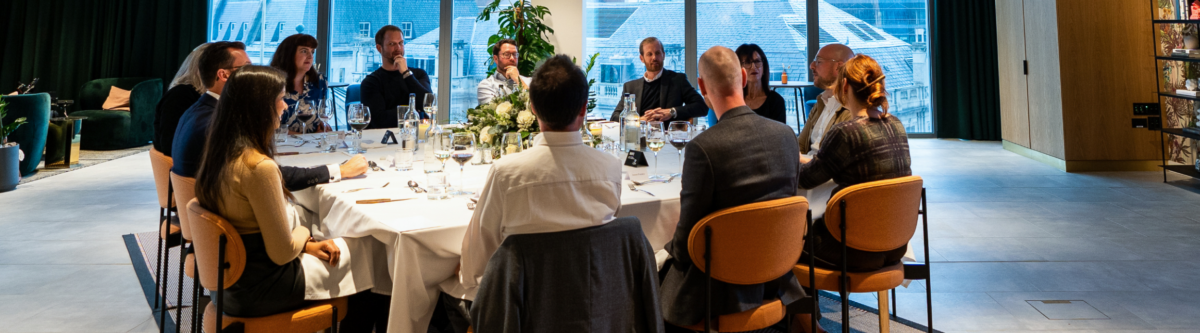
We gathered a group of thought leaders at our 22 Bishopsgate location in the City of London, UK, to consider hybrid meetings and events and how to make them work for both staff and employers.
Hybrid ‘misfits’
A report from the British Leeds University Business School, ‘Where Is Your Office Today? New Insights on Employee Behaviour and Social Networks’, revealed that 52% of UK office workers are even more keen on hybrid working than they were 12 months ago. Their reasons ranged from work-life balance to being able to fulfill commitments at home.
But the research found that those who spend too much time remote working miss the social life of an office, the chance for collaboration, and the ideas-sharing. Some miss out on learning about how their organization works, and its culture and values. “Those with the experience of face-to-face interaction understand the value of that lived experience,” commented one of roundtable participants Nell Harwood, Google’s events program manager, EMEA.
Tellingly, more than one third (39%) of those quizzed by the Leeds University team saw themselves as ‘hybrid misfits’, who are yet to get the balance right between working at home or in an office.
Make the best of IRL time
Our discussion found that when hybrid doesn’t work, it is often because that limited in-person time is not being maximized. Despite the changing perception of the office and how it’s used, the Leeds research found that the office environment was still used predominantly for solo work, with almost 60% of tasks reported to researchers deemed to be individual-focused.
The importance of in-person interaction, even among the hybrid workforce, should not be underestimated, said Susan Freeman, partner at law firm Mishcon de Reya and the roundtable’s chair. “Watching, listening, and learning how experienced colleagues deal with clients is invaluable, particularly for a young entrant. There is a lot one can do on a Zoom call, but it’s questionable if relationships can be built up that way.”
Elliott Sparsis, Convene’s head of UK, added that even being in the same room has value: “There’s so much learning that can come through osmosis when you’re young and in an office set-up that you just can’t get from working at home. There are a lot of soft skills that are in danger of being lost.”
The takeaway is that staff need to get talking – and listening – when they are in the same room, and employers need to make sure it happens in high-quality, inclusive spaces where people want to be and where they can relax, listen and interact.
The workplace environment remains a key influence in terms of how employees think, feel, and interact when doing their job.
But when you’re connecting to a meeting or event remotely, the environment that you’re seeing on screen and – crucially – the quality of the technology connecting you can make or break the experience.
Invest in your people
Understanding the needs of employees is vital, said WeWork’s head of real estate, EMEA, David Kaiser. “People want a lot more collaborative space, creative space, breakout space. Getting those aspects right, finding out what your staff want, what they need, those things help considerably.”
Employers should also look at how they can use management and training to promote successful hybrid behaviors. Managers should give clear guidance to their teams – both long-standing staff and not just new recruits - about how they expect hybrid working to happen.
You can even provide training in what great hybrid working looks like. If you are thinking that doesn’t sound necessary, consider this: The Leeds University research team found that almost three quarters (74%) of office workers polled wanted training for hybrid working, yet less than 10 (8.5%) had received any guidance for hybrid meetings.
Keep things flexible
While giving structure to hybrid in this way is vital, the Leeds University report highlighted the importance to workers of flexibility and control: “There is clear evidence that employees desire and benefit from choice over where, when and how they work.” Flexibility and choice, researchers found, boost performance and wellbeing, ultimately helping with staff retention.
Taking team decisions about locations will help too. For example, asking your team what they think is the best working environment for a particular activity. Deliveroo’s Ben Fawcett observed that these conversations need to take note of the fact that hybrid means different things to different people:
“You have to delve into the various departments and sub-departments to get the best out of those teams’ decisions. Are they going to work from home? Are they going to work remotely? Sometimes you have to dictate somewhat, especially with younger teams, or more sales focused roles where they need to be in on a day to day basis.”
A flexible, engaged, and collaborative approach, then, along with good design and great technology, can result in hybrid working that works for everyone. It can also allow for a more inclusive environment, making it easier for those unable to come to IRL events and meetings, and more productive and motivated teams.
Thank You To Our Attendees
Athely Guedes, Principal at Gensler
Ben Fawcett, Global Head of Real Estate and Workplace at Deliveroo
Brendan Frye, Senior Vice President at Eastdil
David Kaiser, EMEA Head of Real Estate at WeWork
Duncan Kennedy, Head of Data and Analytics at LMRE
Elliott Sparsis, Head of UK at Convene
Imogen Privett, Associate Director of Workplace Innovation at UnWork
James Frankis, Head of Product at Convene
Matthew Davis, Psychologist and Associate Professor at University of Leeds
Nell Halford, Events Program Manager, EMEA at Google
Oliver Marlowe, Co-Founder and Creative Director at Studio Tilt
Susan Freeman, Partner at Mishcon de Reya